

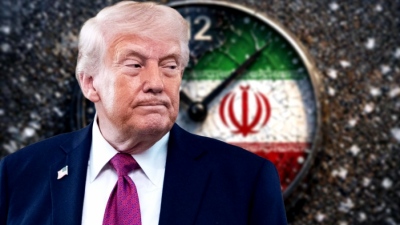
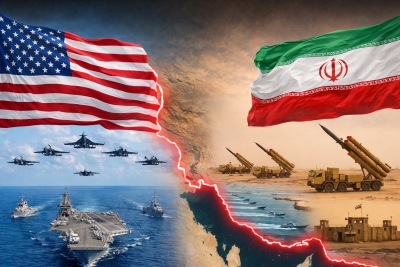
Iran has engaged in a true show of force against the US and President Trump in recent hours. It is not just that it ignores the American president's threats and rejects his proposals for negotiations; it is becoming the regulator of developments, setting its own terms for how talks could resume. This is a true power now recognized by more and more Western media outlets. For example, CNN acknowledges that Iran is not going to back down first in the economic war with the US, while MSNBC reports that most experts converge on the view that Iran has greater endurance than the US. In fact, there are estimates that the American economy and society will explode once the price of gasoline reaches 5 dollars per gallon. At the same time, Iranian tankers are breaking the US naval blockade, while reports highlight the enormous resilience of the Iranian navy, which, despite the massive blow it suffered, continues to "wound" the superpower mortally and remains the one controlling the Strait of Hormuz.
Strikes on the fleet
The Iranian Navy and the Islamic Revolutionary Guard Corps (IRGC) lost a significant portion of their ships within the first few days of the war. The largest vessel and pride of the fleet—the aircraft carrier Shahid Bahman Bagheri—was sunk. As a result of an anti-ship missile strike, the advanced IRGC floating base Shahid Mahdavi was also sunk. The helicopter carrier Makran was destroyed. 
The missile corvette Shahid Sayyad Shirazi suffered severe damage, and the frigate Sabalan was put out of action. Repair tanks on several submarines were also hit. Essentially, Iran lost the majority of its surface fleet and the ability to project naval power beyond the Persian Gulf.
The 4 causes
The causes of the collapse are obvious. First, the US knew the coordinates of the Iranian ships in advance thanks to satellite and aerial reconnaissance. All basing points of the major units had been known to the Pentagon for a long time. Second, the "Achilles' heel" of the Iranian navy was the absence of modern anti-aircraft defense systems on the ships capable of repelling air attacks. Third, the US immediately achieved air superiority due to the vast difference in capabilities between the two countries' air forces. The Iranian air force could practically not cover the fleet. Fourth, from the beginning, the Americans intensively struck port facilities, shipyards, and logistics hubs, making the restoration and relocation of the fleet nearly impossible.
Over 50 ships
According to data from the Pentagon and the US Central Command (CENTCOM), in the first days of the conflict, the Americans struck more than 50 Iranian warships. Specifically, within 48 hours, 11 large vessels of the Iranian Navy were destroyed or severely damaged. At that time, Donald Trump announced a definitive victory and the complete neutralization of the Islamic Republic's fleet. However, Tehran soon proved that it does not intend to surrender the Persian Gulf to its opponent—and that in the battle for the Strait of Hormuz, it currently prevails over the US.
Two blockades
Tehran, it is recalled, closed Hormuz to the ships of unfriendly states. Last week, the IRGC navy seized two ships that attempted to pass through the strait without Tehran's permission. These are the Panama-flagged MSC FRANCESCA and the Liberia-flagged EPAMINODAS. 
The Iranian side claims they posed a threat to maritime security and lacked the necessary permits. The ships were escorted to the Iranian coast, and shortly after, Tehran published video of the boarding operations.
Iran släpper video från beslagtaget grekiskt containerfartyg
— Existenz.se (@Existenzse) April 27, 2026
Iran har publicerat bilder infrån det grekiskt styrda containerfartyget Epaminondas i Hormuzsundet.
Källa: PressTV pic.twitter.com/jG0atvZSjl
The Americans are failing
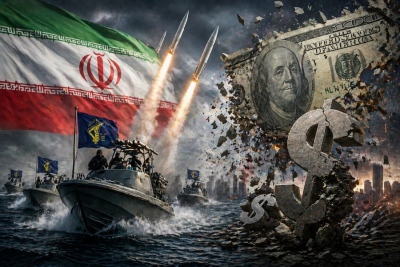
At the same time, the US, which also announced a blockade of the Strait, is so far implementing it rather moderately. At least 34 tankers and gas carriers managed to bypass the American blockade of Iranian ports. This is reported by Bloomberg, citing data from the analytical firm Vortexa. According to these figures, 19 tankers associated with Iran exited the Persian Gulf, while 15 entered it. It is evident that the US Navy simply does not have a sufficient number of ships in the region. Other factors also play a role, such as the distance from the naval bases themselves, the threat from Iranian anti-ship missiles—which forces ships to keep their distance from the coast—the fatigue of American crews, and supply problems. Tehran's successes are primarily linked to unconventional tactics using available naval assets. To block the Strait of Hormuz, the Iranians utilized a "mosquito fleet" (micro-armada). And the Pentagon cannot oppose it with anything effective, as reported by the New York Times. According to the publication, the Islamic Republic still possesses thousands of speedboats equipped with machine guns, anti-ship missiles, torpedoes, and unmanned systems.
Fast boat attack
The "mosquito fleet" operates under the auspices of the IRGC and not the regular army. Its exact composition, numbers, equipment, and bases remain classified. However, the tactics of their use can already be observed, based on the "hit and run" principle. The small boats are stationed in coastal shelters (including those carved into rocks), inaccessible to aerial observation. In attacks, they move in large groups of dozens of small craft, approaching the target like a swarm from different directions. Their strength lies in numbers and surprise. They attack ships and then withdraw instantly, remaining invisible to US satellites and destroyer radars.
The vessels of the mosquito fleet
Iran possesses many different types of speedboats, though reliable information exists for only a few. For example, the Ashura, based on the American Boston Whaler, reaches speeds of up to 130 kilometers per hour and can carry various weapon systems—even light anti-ship missiles capable of causing problems even for a destroyer. Or the Zolfaghar vessels, built after the model of North Korean IPS 16 torpedo boats and equipped with anti-ship missiles with a semi-armor-piercing high-explosive warhead weighing about 150 kilograms. 
Iran also possesses "floating" multiple rocket launcher systems—the Seraj boats, carrying 107 or 122 mm launchers. In addition to the speedboats, several dozen mini-submarines of the Ghadir and Nahang classes can be included in the Iranian "mosquito fleet," regarding the destruction of which the US has reported nothing. Naturally, they cannot sink an aircraft carrier, a destroyer, or a large tanker, nor cause serious damage. However, the IRGC can use them for the secret laying of naval mines, which will significantly restrict the movement of military and commercial ships through the Strait of Hormuz.
CNN: Iran will also win the economic war
CNN, in one of its reports, states that Iran, based on the experiences of previous years, is not going to back down easily from an economic war. As mentioned, the US naval blockade against Iran has put pressure on the country, leading to an increase in food prices. However, if the US is ready to continue the blockade for months, the consequences will be global and energy prices will rise significantly. Just as Iran is under pressure, Donald Trump’s associates know that he too is under pressure. The US president faces increasing domestic reaction to the war, as well as the approach of critical midterm elections. Tehran may have calculated that Trump will back down first.
Will the US back down first?
An expert stated to CNN: "Iran has already experienced the 'maximum pressure' campaign during Trump’s first term and was forced to cut its oil production in half. If the blockade continues for months, it will certainly affect Iran's economic outlook, but Tehran's assessment is that the US itself cannot withstand this pressure for a long time." The blockade, which began at Iranian ports more than ten days ago, has now expanded globally, with every ship related to Iran being closely monitored by the American navy. Nevertheless, according to experts, Iran can likely continue current oil production for another two to three months. It still possesses storage space on land and can increase capacity by using decommissioned tankers. The south of Iran constitutes the backbone of the country's trade and economy. Kharg Island alone exports about 90% of Iranian crude oil. The naval blockade has significantly restricted these facilities, but the conflict also threatens the global supply of aluminum, plastics, and rubber. The Middle East handles about 25% of global polypropylene and 20% of polyethylene, as well as a quarter of the world's sulfur and 15% of its fertilizers.
Iranians are used to it – Americans are not
The Iranian government stated that there is no shortage of goods and that the supply chain remains active, with 85% of agricultural products and basic goods produced domestically. However, while many American voters worry about the rising price of gasoline, Iranians are more accustomed to such difficulties. As one expert noted: "The goal of the Iranian leadership during the war is not the operation of a normal economy. The goal is simply to keep the economic engine running as much as possible and for as long as possible—and they can likely achieve this." CNN reports that jet fuel costs have doubled, significantly increasing the operating expenses of American airlines. Tickets have increased by about 20%, while less profitable flights are being reduced and market concentration is intensifying.
MSNBC: The US will back down once gas hits 5 dollars
Most analysts estimate that if the price of gasoline reaches 5 dollars, then Donald Trump might be the one to back down first. According to MSNBC, a "showdown" has begun over which economy—that of the US or Iran—will endure the war longer, with most experts considering that Iran has a clear advantage in resilience to economic pressures.
1. Shift of the conflict field to the economy Dan Pickering, an oil industry analyst from the firm Pickering Energy Partners, stated: "The battlefield has temporarily shifted from the military level to the economy. The bombings have stopped and now we are trying to exert pressure on each other. Both sides are showing greater resilience than expected."
2. Iran's advantage in endurance Ellen Wald, a former US National Security Council official and fellow at the Atlantic Council, stated: "The Iranians are used to sacrifices, so they have a greater capacity to endure economic hardships compared to other economies."
3. "Time bomb" for the US economy Barbara Leaf, a former State Department official, warned that there is a more immediate threat to the US: "If the Strait of Hormuz remains closed until the end of April, the fuel and fertilizer shortages already appearing in Asia will be transferred to the US as price increases." Pickering added that if the price of gasoline reaches 5 dollars per gallon—which could happen within one or two months—Trump might be forced to change course.
Iran fully controls Hormuz
Most ships that crossed the Strait of Hormuz in recent days followed a route determined by the Iranian authorities, while about half of them loaded at Iranian ports, according to the latest shipping traffic data. As CNN reports, this contradicts the American blockade, which aims to prevent ships from using Iranian ports. US interventions in Iranian ships have occurred beyond the Strait. It remains unclear if any of the ships that departed from Iran have been intercepted. Seventeen ships were recorded passing through the strait between Friday 24/4 and Sunday 26/4, according to the shipping information company Kpler—among them four large loaded tankers. Two of these had sailed from Iranian ports and two from the United Arab Emirates. The largest, according to Kpler, was the Greek-owned Jiaolong, which departed from the United Arab Emirates on Friday and arrived Monday at the Indian port of Sikka. Traffic through Hormuz in the last two months is at about 5% of the daily average before the war, causing shortages in refined products, particularly in Asia. Iran has stated it will maintain control of the Strait, while the US announced a blockade of shipping to and from Iranian ports on April 13. Since then, the American military has boarded at least two ships and claims to have intercepted 38. The US Secretary of the Treasury, Scott Bessent, stated last week that Iran will soon be forced to stop crude oil production due to a lack of storage space and export routes. Iranian state media denied that the country faces a lack of storage capacity for its oil. As the paralysis of the Strait continues, Goldman Sachs increased its forecast for the price of Brent oil in the fourth quarter of the year to 90 dollars a barrel.
Message from IRGC: The Axis of Resistance is more united than ever
The commander of the Quds Force of the Islamic Revolutionary Guard Corps, Esmaeil Qaani, stated that the "resistance front" is today more united and cohesive than ever, emphasizing continued support for its key elements, including Hezbollah in Lebanon. In a message published on his social media account, Qaani stated that unity and cohesion across the entire resistance front have been strengthened more than ever, adding that the current priority is supporting Hezbollah and other components of the front. He also added that history shows the "Zionist regime" has not managed in recent decades to complete any war achieving its goals, underlining that developments in southern Lebanon are a continuation of this historical pattern of failure.
www.bankingnews.gr







Σχόλια αναγνωστών